

Maintaining a balanced and nutritious diet is crucial for overall health and well-being. The Dietary Guidelines for Americans, 2020-2025, emphasize the importance of adjusting eating patterns to increase the intake of dietary fiber, calcium, vitamin D, and potassium, while reducing the consumption of added sugars, saturated fat, and sodium. By incorporating a variety of nutrient-dense foods, individuals can optimize their nutritional status and support their long-term health and wellness.
Key Takeaways
- Prioritize whole, unprocessed foods for optimal nutrition
- Increase intake of dietary fiber, calcium, vitamin D, and potassium
- Limit added sugars, saturated fats, and sodium in the diet
- Incorporate a diverse range of fruits, vegetables, whole grains, and lean proteins
- Maintain portion control and practice mindful eating for a balanced approach
Increase Fiber Intake
Dietary fiber is an essential nutrient that plays a crucial role in maintaining digestive health, controlling blood sugar levels, and reducing cholesterol. Unfortunately, most Americans fall short of the recommended daily fiber intake. To boost your fiber consumption and reap the countless benefits, consider incorporating more fruits, vegetables, whole grains, legumes, nuts, and seeds into your diet.
Boost Dietary Fiber
Women are recommended to aim for 25 grams of fiber daily, while men should strive for 38 grams. However, the average American only consumes around 16 grams of fiber per day. To increase your fiber intake, try these simple strategies:
- Snack on raw vegetables like carrots, celery, or cucumber slices.
- Start your day with a bowl of whole grain cereal.
- Add beans or lentils to your salads and soups.
- Enjoy fresh fruits as meals or desserts.
- Sprinkle nuts or seeds on your yogurt, oatmeal, or salads.
By incorporating more high-fiber foods into your daily routine, you can support your digestive health, blood sugar control, and cholesterol levels. Remember, variety is key, so aim to include a diverse range of fiber-rich options in your meals and snacks.
“Eating salad or vegetable soup before a meal has been linked to consuming fewer calories during the meal.”
Prioritize Calcium and Vitamin D
Calcium and vitamin D are essential nutrients that work in tandem to support optimal bone health. While the body can produce vitamin D from exposure to sunlight, some individuals may struggle to generate sufficient amounts, and prolonged sun exposure can increase the risk of skin cancer. Fortunately, there are various food sources and fortified products that can help boost your intake of these vital nutrients.
According to the Institute of Medicine Committee, the Dietary Reference Intakes (DRIs) for calcium and vitamin D have been updated based on current data. The committee assessed chronic disease indicators, such as the reduction in cancer risk and other health outcomes, to determine adequate and excess intake levels for these nutrients. They prioritized examining critical adverse effects to set upper intake levels as well.
To ensure you’re meeting your daily calcium and vitamin D needs, consider incorporating the following into your diet:
- Dairy products like milk and yogurt are excellent sources of calcium. One cup of low-fat Greek yogurt contains about a quarter of the daily calcium requirement.
- Leafy green vegetables like kale and collard greens are also good sources of calcium.
- Other calcium-rich foods include beans, tofu, calcium-fortified plant milks, and small bone-in fish like sardines.
- Look for foods and beverages fortified with vitamin D, such as soy beverages, soy yogurt, orange juice, and whole-grain cereals.
By prioritizing calcium and vitamin D-rich foods, you can take a proactive step towards maintaining strong, healthy bones and supporting your overall well-being.
“The committee assessed chronic disease indicators such as the reduction in cancer risk and other health outcomes to determine adequate and excess intake levels of calcium and vitamin D.”
Boost Potassium Levels
Potassium is an essential mineral that plays a crucial role in maintaining healthy kidney function, heart health, muscle function, and nerve function. However, most Americans today only get about half of their daily potassium requirement. This can lead to serious health issues, including increased blood pressure and a higher risk of cardiovascular problems.
Potassium-Rich Foods
To boost your potassium levels, it’s important to incorporate more potassium-rich foods into your diet. Some excellent sources of potassium include:
- Bananas
- Spinach
- Broccoli
- Potatoes
- Sweet potatoes
- Mushrooms
- Peas
- Cucumbers
- Tomatoes
Other good sources of potassium are milk, yogurt, tuna, halibut, lentils, and brown rice. It’s important to note that people with kidney disease may need to limit their potassium intake, so it’s always best to consult with your healthcare provider.
“Research shows that enough potassium in the diet can lower blood pressure and reduce the risk of cardiovascular problems.”
To ensure you’re getting enough potassium, aim to eat a variety of fruits, vegetables, and other potassium-rich foods throughout the day. Avoiding excessive use of salt and staying hydrated can also help maintain healthy potassium levels.
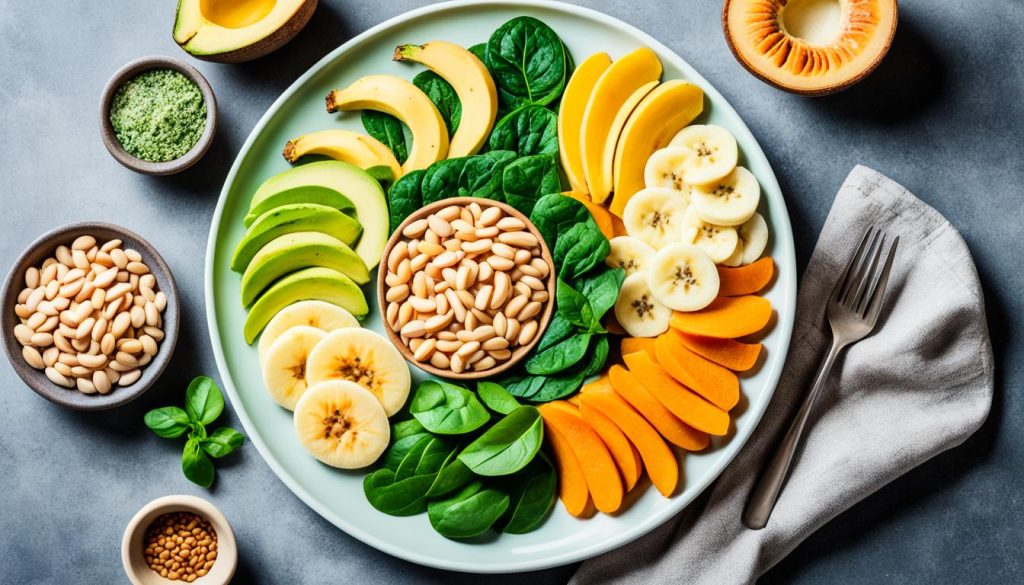
Remember, the recommended daily intake of potassium is around 4,700 milligrams, but most Americans don’t meet this goal. By making small changes to your diet and incorporating more potassium-rich foods, you can take an important step towards better overall health and well-being.
nutrition tips
Maintaining a balanced diet is crucial for your overall health and wellness. By making informed choices about the foods and beverages you consume, you can nourish your body and support your long-term well-being. Here are some nutrition tips to consider:
- Incorporate whole grains like whole-wheat bread, brown rice, and oats into your meals to increase your intake of dietary fiber, vitamins, and minerals.
- Choose unsaturated fats such as those found in avocados, nuts, and olive oil, instead of saturated fats like butter and animal-based products.
- Aim to plan your meals in advance, making it easier to incorporate a variety of healthy eating options into your balanced diet.
- Regularly check food labels to monitor your intake of sodium, added sugars, and other nutrients, ensuring you make informed choices.
- Practice portion control by being mindful of serving sizes and adjusting your intake accordingly to maintain a healthy weight.
Remember, a healthy eating pattern is not one-size-fits-all. Tailor your nutrition tips to your personal preferences, cultural traditions, and budgetary considerations, while focusing on incorporating a variety of nutritious foods into your meal planning.
“Healthy eating is not about strict dietary limitations, staying unrealistically thin, or depriving yourself of the foods you love. Rather, it’s about feeling great, having more energy, and keeping yourself as healthy as possible – all of which can be achieved by making informed food choices.”
Choose Healthy Fats
When it comes to nutrition, not all fats are created equal. Healthy fats, such as unsaturated fats, can offer numerous benefits for your heart health. In contrast, saturated fats and trans fats can have a negative impact on your cardiovascular wellbeing.
Unsaturated Fats over Saturated Fats
The Health and Human Services (HHS) and the U.S. Department of Agriculture (USDA) recommend consuming less than 10 percent of your daily calories from saturated fats. Research has shown that if calories from saturated fats are swapped with refined carbs, there could be an increased risk for cardiovascular disease.
On the other hand, unsaturated fats, such as those found in olive oil, avocados, and nuts, can help lower bad cholesterol levels and reduce the risk of heart disease. In fact, increasing total fat intake, whether saturated or unsaturated, has been associated with a lower risk of cardiovascular diseases.
To incorporate more healthy fats into your diet, try using unsaturated oils like canola, olive, or peanut oil instead of butter or margarine. Replace full-fat dairy products with their low-fat or fat-free counterparts. Opt for lean protein sources like fish, poultry, and legumes over high-fat meats.
“Eating a diet rich in healthy fats can help you maintain a healthy weight, boost your heart health, and provide essential nutrients for your body.”
By making simple swaps and focusing on unsaturated fats over saturated fats, you can enjoy the benefits of healthy fats while supporting your overall wellbeing.
Reduce Sodium Intake
Eating too much sodium can raise your risk of high blood pressure, heart disease, and stroke. In fact, nine out of 10 Americans consume more sodium than necessary, leading to potential health risks. To protect your heart, it’s crucial to reduce your sodium intake.
The recommended sodium limits per day vary by age group. For adults and teens aged 14 and older, the limit is no more than 2,300 mg. For children ages 9-13, it’s 1,800 mg, and for ages 4-8, it’s 1,500 mg. The smallest ones, ages 1-3, should have no more than 1,200 mg of sodium per day.
The majority of the sodium Americans consume comes from packaged and processed foods, not the salt shaker. To cut back, choose products with 5% Daily Value (DV) of sodium or less, and avoid those with 20% DV or more, which are considered high in sodium.
- Opt for fresh, frozen, or canned vegetables with no salt added.
- Purchase fresh poultry, fish, pork, and lean meat more often than processed meats.
- Cook at home to have better control over sodium content.
- Replace or reduce salt with alternatives like garlic, citrus juice, or salt-free seasonings.
- Increase your intake of potassium-rich foods, such as potatoes, bananas, and beans, to help lower blood pressure.
By making these simple changes and reading food labels carefully, you can significantly reduce your sodium intake and improve your heart health.

“Eating too much sodium can increase blood pressure and the risk of heart disease and stroke.”
Eat a Rainbow of Colors
Incorporating a variety of colorful fruits and vegetables into your diet is an excellent way to ensure you’re getting a wide range of essential vitamins, minerals, fiber, and antioxidants. Each hue provides unique phytonutrients that offer specific health benefits, so it’s important to “eat the rainbow” for optimal nutrition.
Red fruits and vegetables, such as tomatoes and watermelon, contain lycopene and vitamin A, which may help reduce certain cancer risks and improve heart health. Orange and yellow produce, like carrots and sweet potatoes, are rich in carotenoids that support eye health and may lower cancer risk.
Green leafy greens, such as spinach and kale, are packed with chlorophyll and other phytonutrients with anti-inflammatory and antioxidant properties, potentially reducing the risk of cancer and heart disease. Blue and purple fruits and vegetables, including blueberries and eggplant, boast anthocyanins that can benefit heart health and brain function.
White and brown produce, like garlic and mushrooms, contain allicin and anthoxanthins, offering antioxidant and anti-inflammatory benefits that may lower cancer risks and improve heart health. Incorporating a variety of colorful fruits and vegetables into your meals is an easy way to boost your intake of essential vitamins, minerals, fiber, and antioxidants.
Remember, the more color on your plate, the more nutrients you’re likely to consume. So, make it a habit to fill your plate with a rainbow of fruits and vegetables to nourish your body and promote overall health and wellness.
Stay Hydrated
Proper hydration is a cornerstone of overall health and wellness. The human body is composed of at least 60% water, making it essential to replenish fluids throughout the day. Water plays a vital role in regulating body temperature, aiding digestion, and supporting cognitive function.
Drink Plenty of Fluids
Experts recommend aiming for ½ to 1 ounce of water per pound of body weight daily. While food can provide about 20% of our water needs, the majority should come from hydrating beverages like water, herbal tea, and infused water. Foods with a high water content, such as cucumbers, lettuce, and watermelon, can also contribute to your daily hydration.
To ensure you’re staying hydrated, the U.S. Department of Veterans Affairs suggests monitoring the color of your urine. Pale yellow or clear urine is a good indicator that you’re well-hydrated, while dark yellow urine may signal dehydration. The agency also recommends recognizing the signs of dehydration, which can include fatigue, headaches, and dizziness, and taking steps to increase your water intake.
Whether you prefer plain water or enjoy experimenting with flavor-infused options, staying hydrated is a simple yet powerful way to support your overall health and well-being.
“Drinking water is the best way to stay hydrated, as it’s free of calories, sugar, and additives.”
Conclusion
Achieving optimal health and wellness through nutrition requires consistently making healthy food and beverage choices. By increasing your intake of fiber, calcium, vitamin D, and potassium, while limiting added sugars, sodium, and saturated fats, you can support your overall wellbeing. Aim to eat a variety of colorful fruits and vegetables, choose lean proteins and unsaturated fats, stay hydrated, and make small, sustainable changes to your eating habits over time.
A balanced nutrition tips approach that emphasizes healthy eating habits and a balanced diet can promote wellness and reduce the risk of chronic diseases like heart disease, diabetes, and certain cancers. By making informed choices and incorporating these essential nutrition tips into your daily routine, you can prioritize your health and set yourself up for long-term success.
Remember, small, consistent steps toward a healthier lifestyle can have a significant impact on your overall well-being. Embrace the journey, celebrate your progress, and continue to explore new ways to nourish your body and mind through the power of nutrition tips and healthy eating.