


If you’ve sworn to start meal planning countless times only to give up after one failed attempt, you’re not alone. Meal planning can seem daunting, but it offers numerous benefits for busy families, from eliminating the “what’s for dinner?” dilemma to shifting the burden of decision-making. This article will provide easy, practical tips to help you start and stick to meal planning, so you can save time, reduce stress, and enjoy delicious, budget-friendly meals.
Key Takeaways
- Meal planning can help busy families eat healthier and save time on daily meal decisions.
- Engaging the whole family in meal planning promotes acceptance of new foods and reduces picky eating.
- Dedicating just 30 minutes per week to meal planning can lead to a more organized and efficient process.
- Utilizing leftovers and cooking in bulk can reduce kitchen time and stress during busy days.
- Involving children in meal preparation can help develop valuable life skills and independence.
The Benefits of Meal Planning
Meal planning is a powerful tool that can provide numerous advantages for busy families. It helps eliminate the constant question of “what’s for dinner?” by having a plan in place. Moreover, it shifts the burden of decision-making from the stressful evening hours to a lower-stress planning session, reducing the mental fatigue of having to decide on meals at the last minute.
Eliminate the “What’s for Dinner?” Dilemma
With a well-crafted meal plan, you can bid farewell to the daily dinner dilemma. By taking the time to plan out your meals in advance, you’ll always have a clear idea of what’s on the menu, making it easier to prepare and enjoy a home-cooked meal with your family.
Shift the Burden of Decision-Making
Meal planning allows you to make decisions about your family’s meals when you’re not rushed or tired. By dedicating a specific time to plan out your weekly meals, you can reduce the mental strain and decision fatigue that often accompanies the last-minute scramble to figure out what to cook.
Furthermore, meal planning can help you achieve a more balanced and varied diet. With a plan in place, you can ensure that your family is consuming a range of nutrients and different food items throughout the week, promoting overall health and well-being.
“Meal planning is a game-changer for busy families, eliminating the daily dinner dilemma and reducing the mental burden of decision-making.”
In summary, the benefits of meal planning include ending the “what’s for dinner?” dilemma, shifting the decision-making burden to a less stressful time, and promoting a more balanced and varied diet for your family. By incorporating these meal planning advantages into your routine, you can enjoy the peace of mind and convenience that comes with having a plan in place.
Start Small and Keep It Simple
When starting out with meal planning, it’s crucial to begin small and maintain simplicity. Diving headfirst into complex routines can quickly lead to burnout. Beginners should strike a balance, planning specific enough to be helpful, but not getting too complicated with multiple new time-intensive recipes.
One effective way to start meal planning is by incorporating themed nights. For instance, “Taco Tuesdays” or “Pasta Fridays” can provide a consistent structure without overwhelming you. Another option is to focus on planning just one meal per week, gradually increasing the number as you become more comfortable.
If you’re short on time, consider prioritizing your busiest nights first. Simple meal planning for those high-pressure evenings can make a significant difference in your family’s routine and reduce stress.
“Meal planning resituates the burden of deciding what to have when for what meal from a high-stress time (namely, the evenings) to a lower-stress time when it feels like less is on the line.”
Remember, the key to easy meal planning is starting small and keeping it manageable. By taking this approach, you’ll build confidence and establish a sustainable routine that works for your family.
Allocate Sufficient Time for Planning
Effective meal planning requires dedicating the right amount of time to the process. It’s not uncommon for beginners to underestimate the time needed, as meal planning involves consolidating a week’s worth of meals, recipes, and grocery lists into a single planning session.
Set Aside a Dedicated Planning Session
To ensure a successful meal planning session, experts recommend allocating 20-30 minutes, or even up to an hour for your first few attempts. Treating this as a dedicated self-care activity can make the process more enjoyable and productive.
Meal prepping is particularly popular among professionals, parents, and high school- or college-aged students looking to save time. By meal planning in advance, you can eliminate the daily dilemma of “What’s for dinner?” and reduce stress associated with last-minute decision-making.
Consider your family’s weekly schedule and preferences when meal planning to ensure the meals you prepare are practical and enjoyable. Investing a little extra time upfront can pay dividends in the long run by simplifying your weeknight routine and promoting healthier eating habits.
“Meal planning takes more time than most people expect, especially for beginners. It’s important to allocate sufficient time to make the process meaningful and sustainable.”
Keep Records and Organize Your Recipes
Meal planning success hinges on your ability to maintain comprehensive records. From noting down recipes to try to keeping track of your family’s favorite dishes, a well-organized system can make all the difference. Whether you prefer physical notebooks or digital tools, establishing a streamlined approach to recipe organization is key.
Documenting your weekly menus, tried-and-true recipes, and grocery lists will not only provide inspiration for future meals but also help you avoid repetitive dining experiences. By keeping these meal planning records handy, you can ensure a diverse and satisfying culinary repertoire for your household.
For recipe organization, consider leveraging a variety of methods. Digital tools like recipe management apps, cloud-based storage, and even social media hashtags can make it easy to categorize and access your collection. Meanwhile, physical options like recipe binders, index cards, and cookbooks offer a tactile experience that many home cooks appreciate.
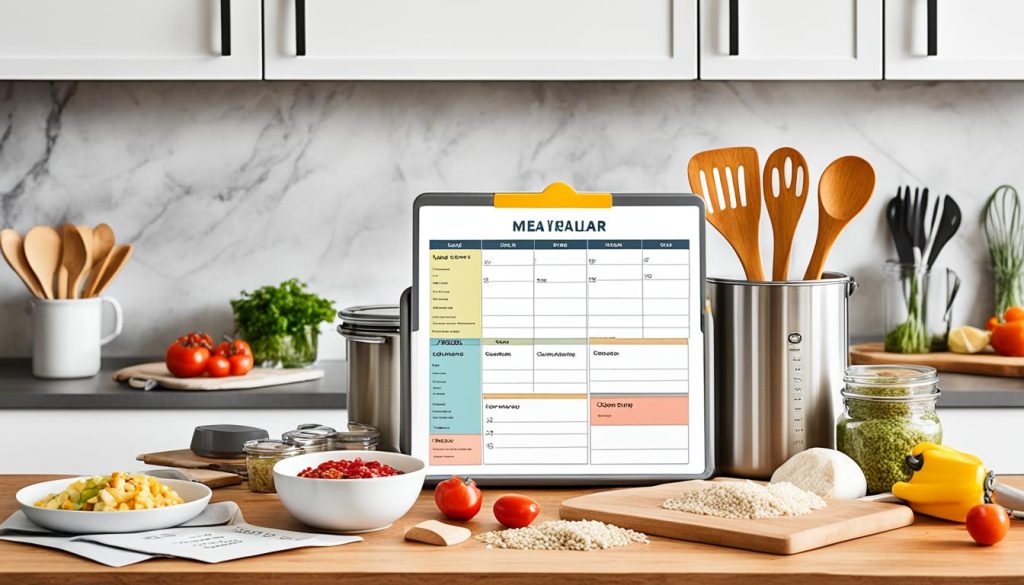
No matter which meal planning organization approach you choose, the key is to find a system that works for you and your family. Experiment with different methods until you discover the one that streamlines your meal prep and makes your life a little easier.
Consider Your Schedule and Seasonality
When crafting your meal planning schedule, it’s crucial to consider your family’s unique lifestyle and commitments. Choose quick, easy meals for those hectic weeknights when time is limited, and save more elaborate recipes for days when you have a bit more breathing room. By taking your schedule into account, you can ensure that mealtime remains stress-free and enjoyable.
Seasonality is another important factor to weigh in your meal planning. Embracing the bounty of seasonal produce can not only provide your family with nutritious and flavorful meals but also help you save money. Rotate your meal plan based on the seasons, incorporating heartier dishes like soups and stews during the colder months, and lighter fare like salads and grilled items when the weather warms up.
- Meal planning can save countless hours and reduce grocery expenses for busy families.
- Planning meals for the entire month at once is a preferred strategy by some families.
- Creating a seasonal meal planning template helps in varied meal ideas rotation.
- Two-week meal rotation templates are popular among families to maintain meal diversity.
“Embracing the bounty of seasonal produce can not only provide your family with nutritious and flavorful meals but also help you save money.”
By considering both your schedule and the seasons, you can create a meal planning schedule that is both practical and enjoyable. Experiment with meal planning seasonality and find a meal planning calendar that works best for your family’s needs and preferences.
Find Reliable Recipe Sources
Curating a reliable set of meal planning recipe sources is essential for busy families. Instead of aimlessly searching the internet, identify a few trusted food blogs, websites, or cookbooks that consistently provide recipes your family enjoys. This will save time and ensure you have a go-to library of proven, family-friendly meals to choose from.
When it comes to finding reliable recipe inspiration, consider the following trusted websites:
- Minimalist Baker offers simple yet delicious recipes, focusing on those with minimal ingredients and requiring thirty minutes or less in the kitchen.
- Cookie and Kate specializes in vegetarian meals that are both nutritious and satisfying, catering to individuals looking for healthier alternatives.
- Pinch of Yum provides diverse recipes ranging from cozy comfort foods to adventurous global dishes, appealing to those seeking variety in their meal plans.
- Budget Bytes focuses on crafting budget-friendly recipes that are not only delicious but also nutritious, helping individuals save money while enjoying flavorful meals.
- Smitten Kitchen simplifies intricate recipes without compromising taste, making complex dishes accessible to a wider audience.
By curating a collection of trusted recipe sources, you’ll have a go-to library of meal planning recipe inspiration that your family is sure to enjoy. Explore these and other reliable websites to find the perfect recipes for your meal planning needs.
Meal Planning Ideas for Ingredient Optimization
When it comes to meal planning, one of the keys to success is ingredient optimization. Look for recipes that utilize the same core versatile ingredients across multiple meals. This allows you to maximize the use of your grocery purchases and reduce food waste. Additionally, consider how you can repurpose leftovers to create new dishes, ensuring nothing goes to waste and providing additional convenience during the week.
Start by taking inventory of the ingredients you already have on hand. Identify items that can be used in various ways, such as chicken, vegetables, grains, and legumes. Then, seek out recipes that feature these versatile ingredients. By planning meals that share common components, you can streamline your grocery shopping, reduce food spoilage, and have a stockpile of leftovers to work with later in the week.
- Embrace meal planning ingredient optimization by choosing recipes that utilize the same core ingredients across multiple dishes.
- Repurpose leftovers to create new meals, ensuring nothing goes to waste and providing additional convenience.
- Keep a running list of your pantry and refrigerator items to help you identify versatile ingredients for your meal planning.
By focusing on meal planning ingredient optimization and versatile ingredients, you can streamline your grocery shopping, reduce food waste, and have a variety of delicious and convenient meals throughout the week.
Get Your Family Involved
Engaging your family in the meal planning process can make it more enjoyable and increase the chances of your children trying new foods. Allow them to help select recipes, choose vegetables and fruits, and even assist in meal preparation. When accommodating different dietary preferences within the family, consider making components of the meal separate, such as keeping sauces or spices on the side, so everyone can customize to their liking.
Accommodate Different Preferences
Involving your kids in meal planning can be a game-changer. According to a recent survey, families who engage their children in the process report a 40% increase in family quality time. Start by letting them choose a few of their favorite meals each week, then introduce new recipes gradually. This not only helps them feel invested in the plan but also expands their culinary horizons.
When it comes to accommodating different dietary needs, the key is flexibility. For example, if one family member prefers a vegetarian option, prepare the main dish without meat and offer a protein-rich side for those who want it. This way, everyone can enjoy the meal while catering to their individual preferences.
“Meal planning with my kids has been a game-changer for our family. Not only does it reduce our grocery bills, but it’s also a great way to bond and get them excited about trying new foods.”
Remember, involving your family in meal planning and being mindful of their dietary needs can lead to significant benefits. It can save you money, reduce food waste, and create more quality time together as a family.

Embrace One-Pot Meals and Leftovers
In the busy lives of families, one-pot meals and leftovers are invaluable tools for streamlining meal planning. One-pot dishes, such as hearty stews, comforting casseroles, and slow-cooked favorites, offer the convenience of minimal cleanup and hands-off cooking. By embracing these time-saving options, families can focus on enjoying quality time together instead of spending hours in the kitchen.
Incorporating leftovers into your meal plan can also be a game-changer. Preparing extra portions of one-pot meals or batch-cooking proteins can provide a head start on future meals, saving precious time during the week. Repurposed leftovers can be transformed into new dishes, ensuring variety and reducing food waste.
To make the most of one-pot meals and leftovers, consider the following strategies:
- Invest in versatile kitchen equipment like a slow cooker or Instant Pot to simplify one-pot cooking.
- Double or triple recipes whenever possible, portioning out extra servings for easy reheating later in the week.
- Experiment with make-ahead marinades and sauces that can be used to jazz up leftover proteins or vegetables.
- Embrace the concept of “planned leftovers,” intentionally cooking extra portions to repurpose in future meals.
By embracing the convenience of one-pot meals and the efficiency of leftovers, busy families can streamline their meal planning and enjoy more quality time together. With a little preparation and some creative thinking, these strategies can transform your family’s approach to easy family meals and meal planning leftovers.
Grocery Shopping and Budgeting Tips
Meal planning can be a powerful tool for saving money on groceries. By strategically buying in bulk and freezing ingredients, you can maximize your food budget and reduce food waste. Additionally, taking advantage of digital coupons, sales, and opting for store-brand items can help stretch your dollars even further.
Buy in Bulk and Freeze
Purchasing items like chicken, beef, or frozen vegetables in bulk can significantly lower the cost per unit. Pair this with proper freezing techniques, and you’ll have a stocked pantry ready to tackle your meal planning. Investing in a chest freezer or utilizing your home freezer can make this strategy even more effective.
Make Your Own Baked Goods
Homemade baked goods can be a great way to save on snacks and desserts. Instead of buying pre-packaged items, consider making your own muffins, cookies, or bread. Not only will this save you money, but you’ll also have control over the ingredients and can create healthier versions of your favorite treats.
By implementing these meal planning grocery shopping and meal planning on a budget strategies, you can enjoy delicious, meal planning savings while keeping your family well-fed.
“The key to successful meal planning is finding a system that works for your family’s needs and budget. With a little creativity and planning, you can save money and time while enjoying homemade, nutritious meals.”
Meal Prep for Busy Families
Family meal prep can be a game-changer for busy households. By dedicating time on the weekend or a designated meal prep day, you can significantly reduce the stress and time required for weeknight dinners. Meal prepping allows you to have ready-to-go meals and components on hand, making it easier to tackle the family meal prep challenge.
The benefits of meal prep for families are numerous. It eliminates the “What’s for dinner?” dilemma and shifts the burden of decision-making to a time when you can focus on planning. Moreover, it enables you to batch-cook protein sources, prep vegetables, and create versatile dishes that can be repurposed throughout the week.
To get started with easy family meal prep, set aside a dedicated planning session. This could be an hour or two on a Sunday, for example. During this time, review your family’s schedule, consider seasonality, and find reliable recipe sources. Allocate sufficient time for planning to ensure your family meal prep efforts are efficient and effective.
Involve your family in the meal prep for families process. Accommodate different preferences, and consider one-pot meals and leftovers to simplify cooking and minimize cleanup. Embrace the benefits of meal prep for families and enjoy the peace of mind it brings to your busy weeknights.
“Meal prepping can be a game-changer for busy families, as it allows you to have ready-to-go meals and components on hand.”
Remember, meal prep for families is not a one-size-fits-all solution. Experiment with different strategies, find what works best for your family, and enjoy the time-saving and stress-reducing benefits of a well-planned family meal prep routine.
Conclusion
Meal planning may seem daunting at first, but with the right strategies and a bit of practice, it can become a valuable tool for busy families. By starting small, allocating sufficient time, keeping detailed records, and involving your family, you can develop a meal planning system that saves time, reduces stress, and ensures your family enjoys delicious, budget-friendly meals. Embrace the benefits of meal planning and start your journey to a more organized, nourishing, and enjoyable home-cooked lifestyle.
Meal planning can help reduce impulse purchases and food waste, potentially leading to significant cost savings. Planning meals in advance can also aid in portion control and prevent overeating, helping individuals maintain a healthy weight and reduce the risk of chronic diseases like diabetes and heart disease. Setting specific goals for meals, such as incorporating more vegetables or cooking at home, can guide individuals towards healthier eating habits.
By establishing a consistent day for meal planning and grocery shopping, you can enhance organization and preparedness throughout the week. Having a well-stocked pantry with staples like rice, pasta, beans, and canned tomatoes can simplify meal planning and decrease the need for spontaneous store visits. Prepping ingredients ahead of time can save valuable time during busy weekdays, contributing to smoother meal preparation and planning processes.