

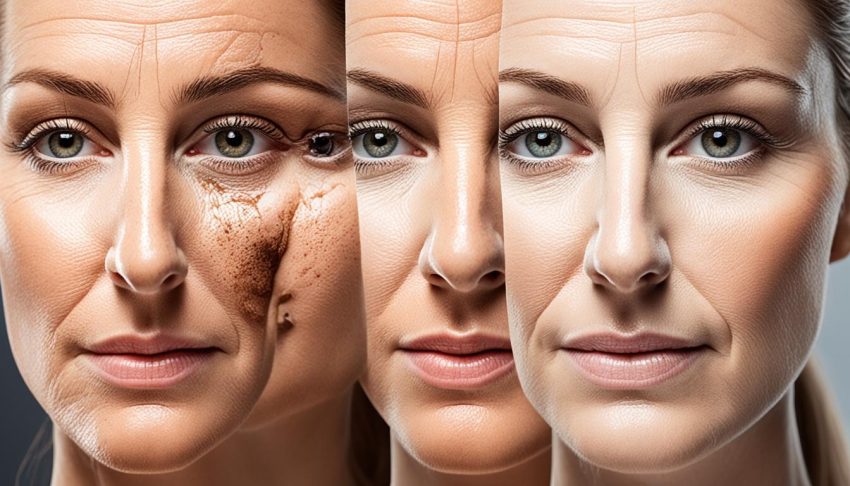
Post inflammatory hyperpigmentation (PIH) is a common skin issue. It shows up as dark spots after the skin gets inflamed. Causes can be acne, eczema, or even minor cuts. Let’s dive into what causes this, who’s more at risk, how to prevent it, and the best ways to treat it.
Key Takeaways
- Post inflammatory hyperpigmentation (PIH) is a skin condition that causes discoloration and dark spots after skin inflammation or injury.
- Common causes of PIH include acne, eczema, and other skin injuries that trigger increased melanin production.
- Risk factors for PIH include higher melanin levels, genetic predisposition, and certain skin types.
- Effective treatments for PIH include topical products, chemical peels, and laser therapy.
- Preventing PIH involves protecting the skin from sun exposure, managing underlying conditions, and following a consistent skincare routine.
What is Post Inflammatory Hyperpigmentation?
Post inflammatory hyperpigmentation (PIH) is when the skin develops dark patches. This happens after the skin is inflamed or hurt, causing increased melanin production.
Definition and Symptoms
PIH is a type of skin discoloration that shows after an injury or inflammation. For example, after acne, eczema, or cuts. The symptoms include brownish, reddish, or purple patches. These patches can stay on the skin for a long time.
Types of PIH
There are different types of post inflammatory hyperpigmentation. These include epidermal, dermal, and mixed PIH. The type you have depends on where in the skin the dark patches appear.
Causes of Post Inflammatory Hyperpigmentation
Post inflammatory hyperpigmentation, or PIH, comes from various skin issues and wounds. Knowing the main causes helps us prevent and manage this skin condition better.
Acne and Skin Injuries
Acne is a top reason for PIH. Inflammation from acne can make the skin produce too much melanin. This causes dark spots or discoloration. Cuts, burns, or eczema can have the same effect.
Hormonal Imbalances
Hormone changes can also cause PIH. Conditions like PCOS, pregnancy, or menopause affect hormones. This can lead to more melanin and PIH.
UV Exposure
Too much UV radiation, from the sun or tanning, can make PIH spots worse. UV light tells skin cells to make more melanin, darkening the spots.
Risk Factors and Skin Types
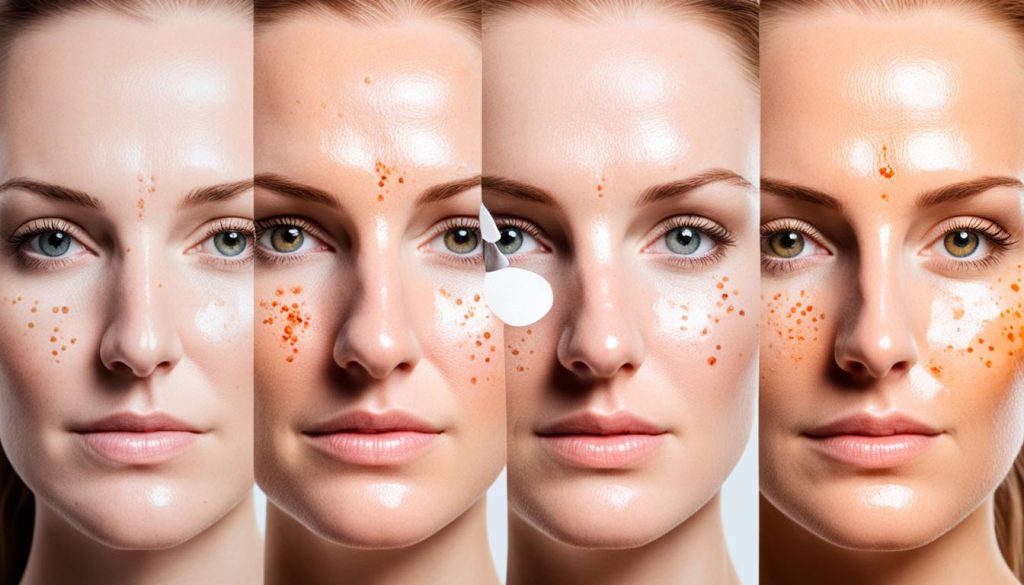
Some things can make a person more likely to get post inflammatory hyperpigmentation (PIH). These include melanin production, skin tone, age, and genetics. Knowing these helps in preventing and dealing with PIH.
Melanin Production and Skin Tone
People with more melanin, like those with dark skin, are often at risk for PIH. Extra melanin is made when the skin is hurt or inflamed. This means there can be lasting dark spots. Yet, even if you have lighter skin, PIH could still occur.
Age and Genetics
Getting older can make our skin take longer to heal and control its melanin. So, PIH might happen more easily. Also, genetics play a role. Some people might get PIH more often after skin issues due to genes.
Knowing these risk factors means you can act to prevent or manage PIH. You can adjust your skincare and look for treatments. This way, you might get a brighter, more even skin tone.
Post Inflammatory Hyperpigmentation Treatments
If you have post inflammatory hyperpigmentation (PIH), there are many ways to treat it. These treatments target the main causes of PIH. They help make dark spots and discoloration look better.
Topical Treatments
First, people use creams and gels to treat PIH. These often have hydroquinone, retinoids, or vitamin C. They reduce melanin, clean the skin, and renew skin cells. This helps fade discoloration.
Chemical Peels
Chemical peels are another option for PIH. They work well for tough cases of post inflammatory hyperpigmentation. Peels with AHAs, BHAs, or kojic acid lighten the skin tone. They also bring out new, evenly toned skin.
Laser Therapy
For severe or wide-ranging PIH, laser therapy might be best. Lasers can deeply treat the skin’s color problems. They break down the darkened skin and help it become more uniform over time.
Working with a skin doctor is key to finding the best PIH treatments. They will consider your skin, the discoloration’s extent, and what you hope to achieve. Often, using different treatments together gives the best results.
Preventing Post Inflammatory Hyperpigmentation
Post inflammatory hyperpigmentation (PIH) can be tough to deal with, but there are steps to help. People can reduce this skin issue by wearing sun protection and sticking to a good skincare routine. It’s also important to treat any skin conditions beneath the surface.
Sun Protection and Skincare Routine
Using the right sun protection is key in keeping post inflammatory hyperpigmentation in check. Apply a sunscreen with an SPF of 30 or more often. This protects your skin from harmful UV rays, which can make discoloration worse. Along with sun protection, a skincare routine full of brightening ingredients can help. Think vitamin C, retinoids, and hydroquinone. They boost your skin’s ability to fight off post inflammatory hyperpigmentation.
Managing Underlying Conditions
Solving any underlying conditions that worsen post inflammatory hyperpigmentation is vital. This could mean getting help from a dermatologist. They can look into and treat issues like acne, eczema, or hormonal problems. Tackling the main reasons behind these skin problems can help stop post inflammatory hyperpigmentation from coming back. This keeps your skin looking smooth and glowing.
Post Inflammatory Hyperpigmentation in Different Skin Tones
Post inflammatory hyperpigmentation (PIH) shows up differently depending on skin tone and melanin levels. Those with darker skin, like African, Asian, or Latin American descent, often see more obvious PIH. This is because their skin has more melanin.
People with lighter skin might not notice as much discoloration from PIH. But it can still be a big issue if it shows up on the face or visible areas. The sun, hormonal shifts, and the cause of the skin irritation can make PIH worse.
“Managing post inflammatory hyperpigmentation effectively often requires a tailored approach that takes skin tone and other individual factors into account.”
No matter your skin tone, finding and treating the cause of swelling helps to lower PIH appearance. Use of sunscreen, brightening items, and treatments like chemical peels can help. Choose what works best for your skin type and needs.
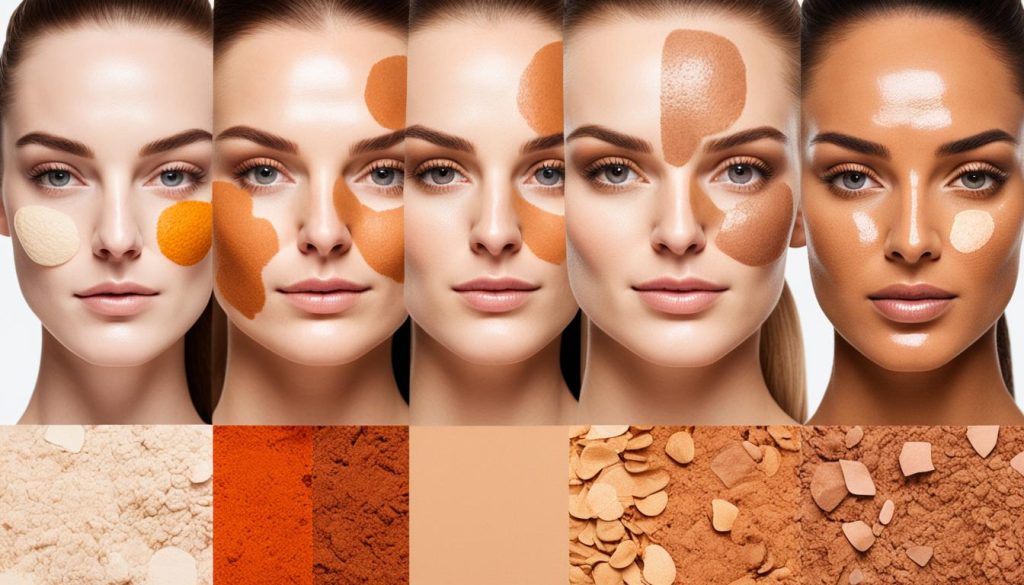
Knowing about post inflammatory hyperpigmentation in different skin tones helps everyone. PIH in dark skin and PIH in light skin affects how we deal with this common skin problem. You can work towards a smoother, glowing skin by being proactive.
Home Remedies for PIH
While seeing a pro is great for PIH, you can also try some home remedies. These home treatments use stuff you might already have. They can help you save money and improve how your skin looks.
Natural Ingredients and DIY Treatments
Many natural remedies for post inflammatory hyperpigmentation use natural ingredients. These ingredients have been shown to make the skin look better by reducing dark spots. Some common DIY treatments include:
- Vitamin C Serums: Serums with vitamin C can help stop dark spots from getting worse and make your skin tone even.
- Kojic Acid Masks: Masks with kojic acid, a natural substance made by certain fungi, can lighten dark spots effectively.
- Turmeric Paste: Turmeric has an active ingredient called curcumin, which fights inflammation. It’s good for those looking for DIY treatments for PIH.
- Aloe Vera Gel: Aloe vera is very calming and keeps the skin moist. It’s a nice option for home remedies for post inflammatory hyperpigmentation.
Regularly using these natural ingredients in your skincare may slowly make your skin look better. You might start to see a more glowing and uniform complexion.
When to See a Dermatologist
If you have mild post inflammatory hyperpigmentation, home remedies or over-the-counter products might work. But, when the skin discoloration is getting worse, big, or just won’t go away, it’s time to see a dermatologist.
A dermatologist can figure out if acne, eczema, or something else is causing your PIH. After figuring that out, they’ll make a plan just for you. They might suggest stronger creams, chemical peels, or laser treatments that you can’t buy without a prescription.
If you’ve used home treatments for a while with no luck, it’s smart to talk to a dermatologist. They’ll look at your skin and needs to pick the best treatment for you.
Conclusion
Post inflammatory hyperpigmentation is quite common but can be tough to handle. It’s often treatable with the right care. Knowing what causes it, the risks, and the treatments can help get rid of it and make your skin tone even again.
Things like acne, skin wounds, or changes in hormones can trigger this issue. If you know what sets it off, you can try to avoid it. Using sunblock, following a skin care plan just for you, and treating other skin problems are all big helps.
Dealing with post inflammatory hyperpigmentation isn’t a quick fix. But, the good news is, many treatments work well. Talking to a skin doctor and finding what works best for you can make a real difference. You can beat this issue and feel great about your skin again.